09 - 10
April 2026
8:00 - 10:30 AM ET
Get news and resources for human rights grantmakers.

Format: Online over two days
Date: April 9-10, 2026
Time: 8:00 AM – 10:30 AM EDT
In just the first month of 2026, the funding landscape for trans communities has shifted dramatically. New policy developments are threatening program stability, deepening existing funding gaps, perpetuating misinformation, and increasing risk for grantee partners worldwide, with direct consequences for the lives and safety of trans people.
Now more than ever, it’s important for funders to step up and strengthen global strategies for trans funding, mobilize greater and more effective resources, and push back against anti-trans agendas.
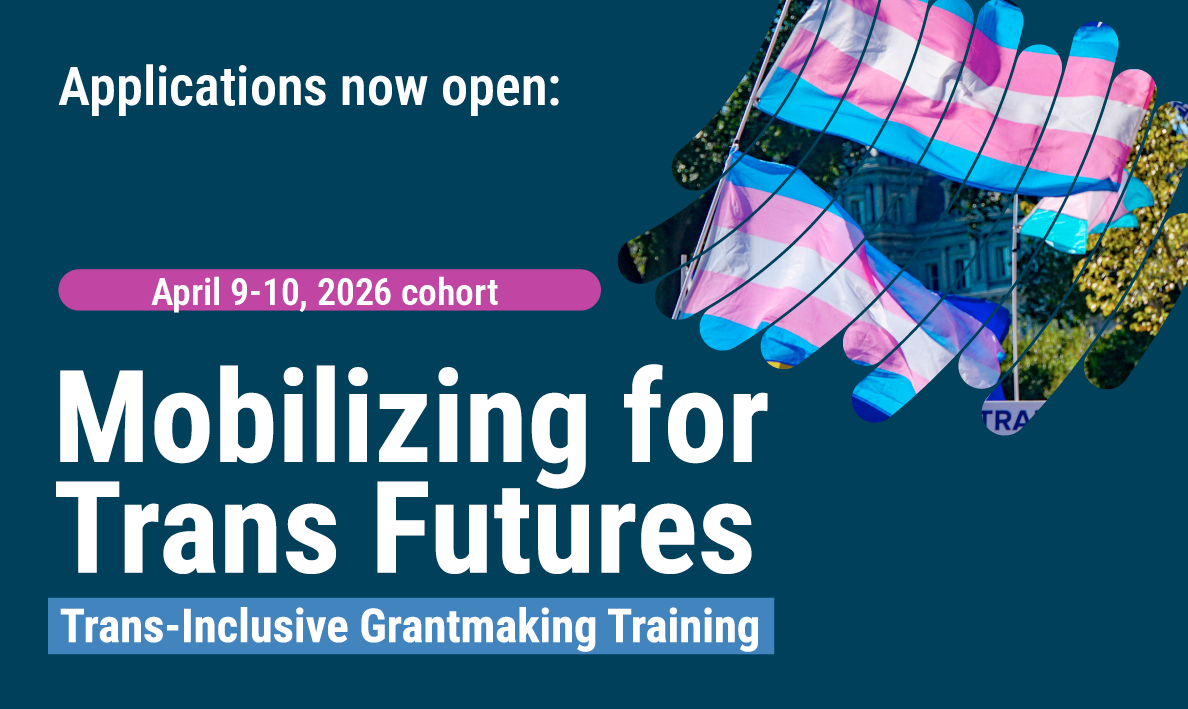
The Mobilizing for Trans Futures training provides a unique opportunity for peer education and open dialogue among funders to explore key questions, discuss challenges, and receive expert guidance on providing intersectional support to trans communities across regions and issue areas.
Who can participate?
This training is designed for grantmakers from philanthropic institutions worldwide committed to advancing trans-inclusive funding practices.
Why join the training?
Registration and cost
The cost for participation is $1,200 USD per person. Scholarships are available.
Submit here your expression of interest to join the April cohort. After submission, GPP will review and send a payment link. Please note that registration will be confirmed until payment is received.
Insights from previous participants
> “The world pushes us to constantly react to threats and challenges so quickly. That’s why spaces like this – spaces that give us time to reflect, connect, imagine new ways to resist, serve, learn and strengthen our movements are essential. I really appreciate it.”
> “One of the most impactful aspects of the training was the emphasis on building narratives that not only name harm, but also clarify values and call people into collective action. The idea that we must name the opposition including their motivations and tactics while also unifying our messaging around the world we want to build, really stayed with me.”